


We Live Streamed From Mars!
We Live Streamed from Mars!
Earlier this year, we were approached by our client, STEM Learning, to assist with a live stream aimed at school children across the country. We had previously worked with them on an event called “Protecting Our Planet Day,” which was hosted locally at the National Oceanography Centre in Southampton. That live stream involved link-ups with researchers in Antarctica, on boats at sea, and in rainforests around the world. We thought that was ambitious—but we weren’t prepared for what came next.
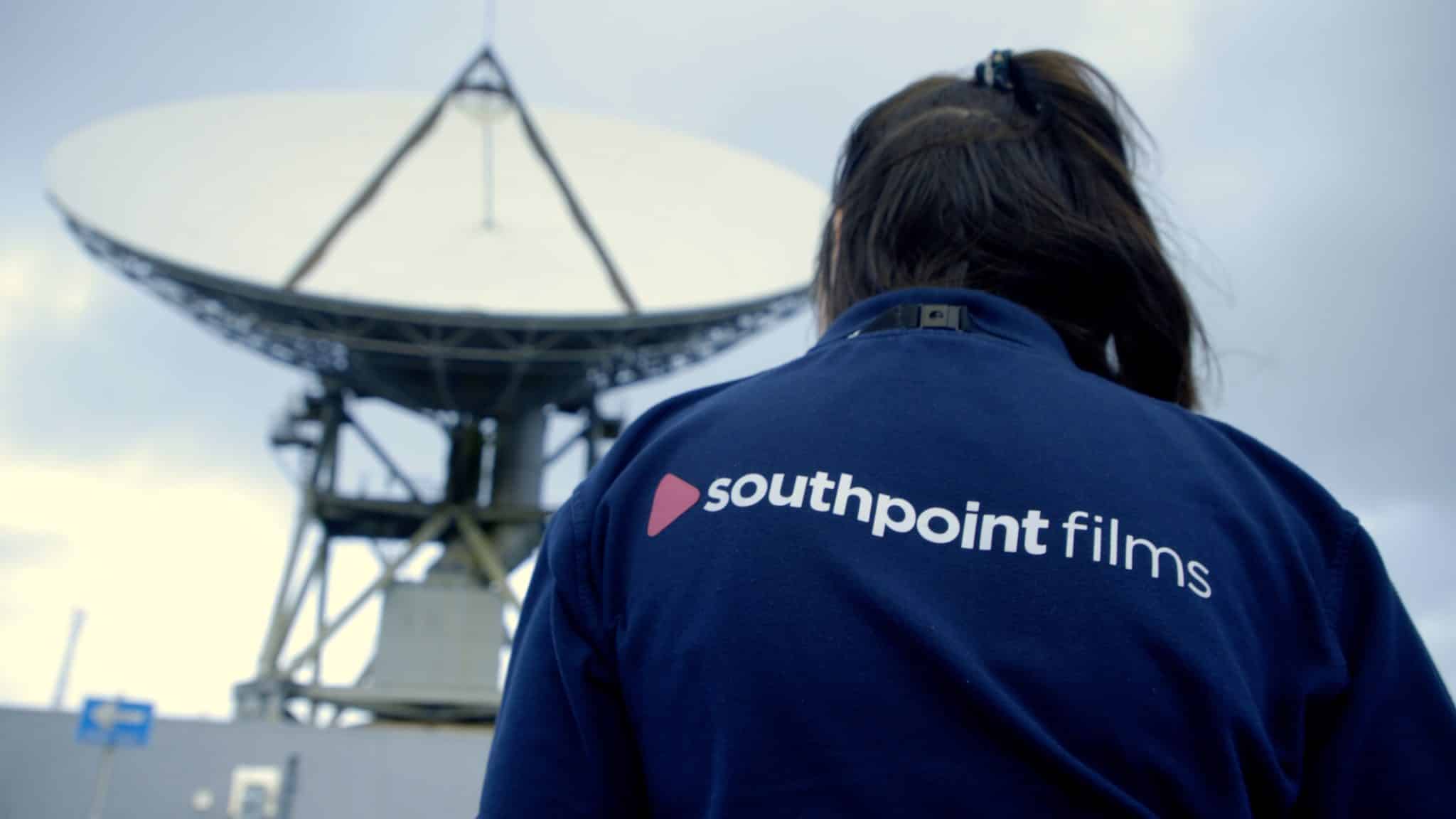
For this event, we would be live streaming from the Goonhilly Research Station in Cornwall. During the stream, we would show an image of Mars captured that same day. As I understand it, this is as close to real time as human technology currently allows.
The Planning Stage
For a project like this, planning was essential. In the weeks leading up to the stream, we put together a tech plan and a running order for the show. The running order detailed the day’s schedule, showing what was happening and where, with information readily available for the crew.
This event featured presenters conducting interviews with virtual callers, an activity session with a visiting school, virtual panel sessions, and some pre-recorded video segments. While the concept seemed straightforward, the execution was more complicated with lots of moving parts. A clear running order ensured everyone knew exactly what they needed to do and where they needed to be.
We created a detailed tech plan that outlined all of the equipment and how it would be connected. There were several technical challenges to address, starting with multiple studios in different locations, These were the mission control room, a conference room, and the control tower with views of all the antennas. We had to set up and coordinate cameras, lights, teleprompters, and communication equipment for the camera team and presenters across all these spaces.
In addition to our physical studios, we had virtual callers and panel sessions happening back-to-back, so we created an A and B system that allowed us to prep the next set of callers while the current ones were live. This setup ensured there would be no interruptions or technical issues during the broadcast.
Time to Head to Cornwall!
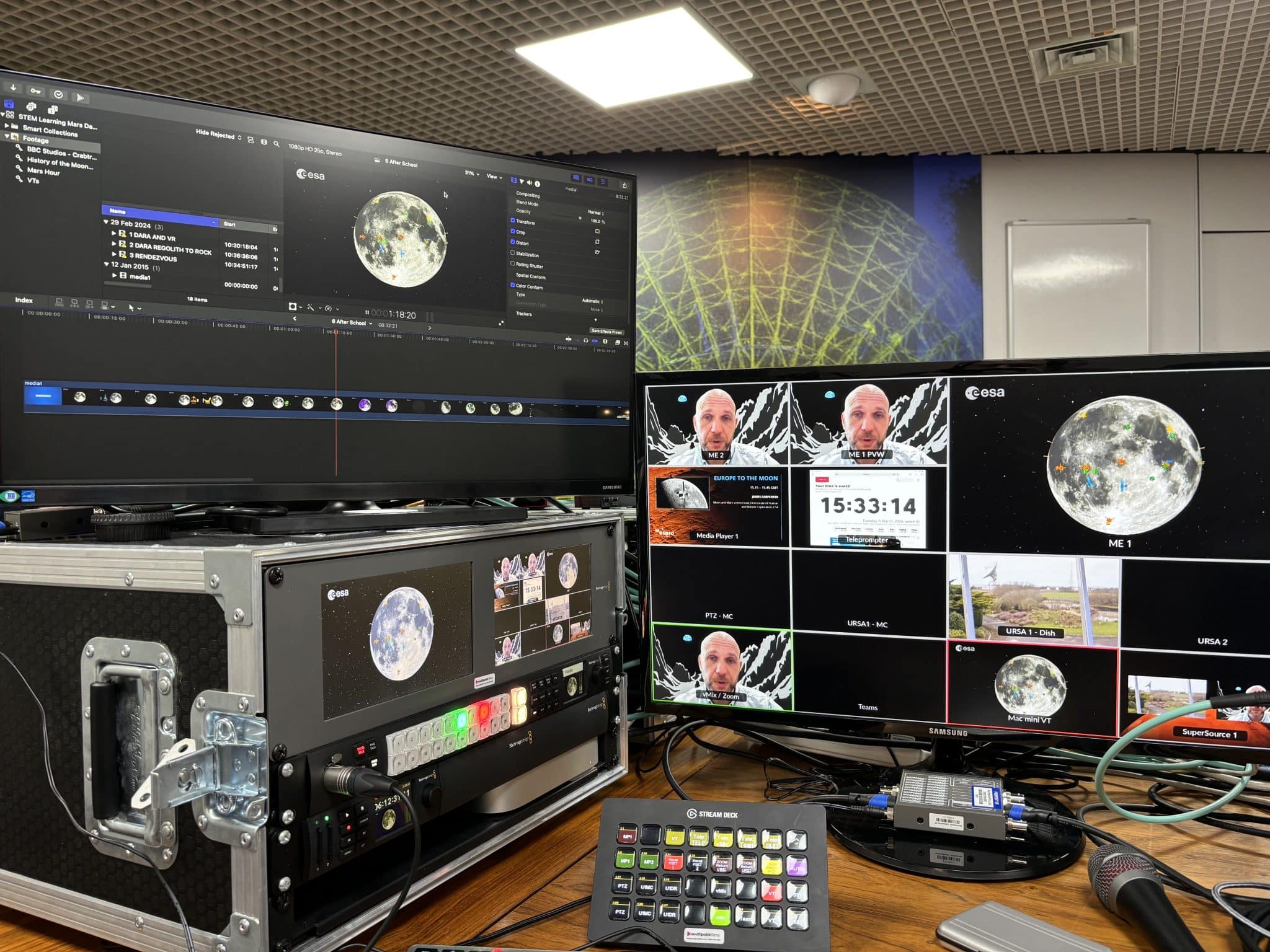
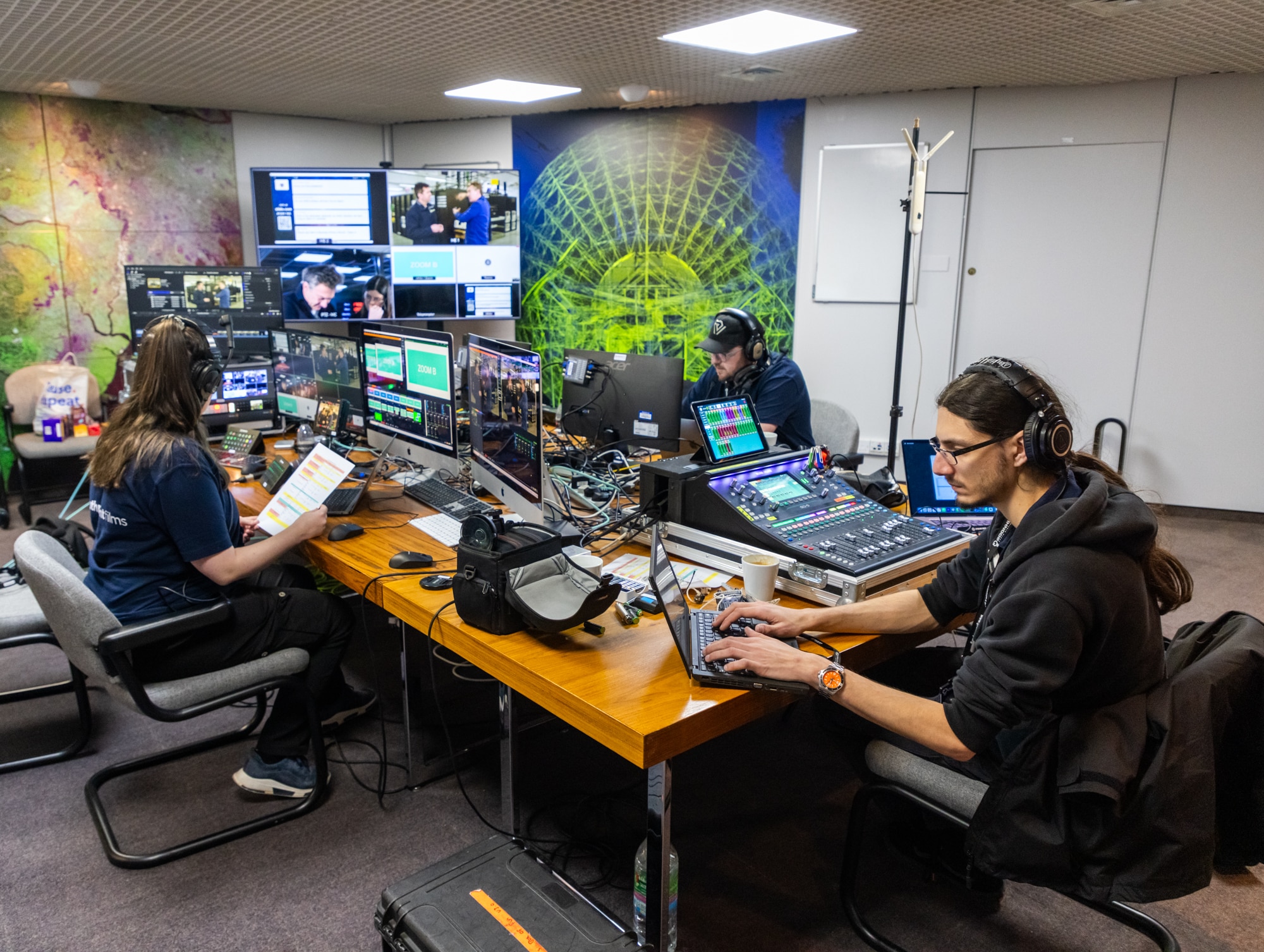
After weeks of planning, March arrived and it was time to head to Cornwall. Our team packed up all of our equipment, thanks to Brad, our sound engineer, who meticulously organised everything for the four-hour drive to the West Country. Upon arrival, we settled into Goonhilly and set up our gallery, with the Blackmagic Atem 2ME Constellation Fly Pack at the heart of our setup, handling all the vision mixing and audio embedding for the stream.
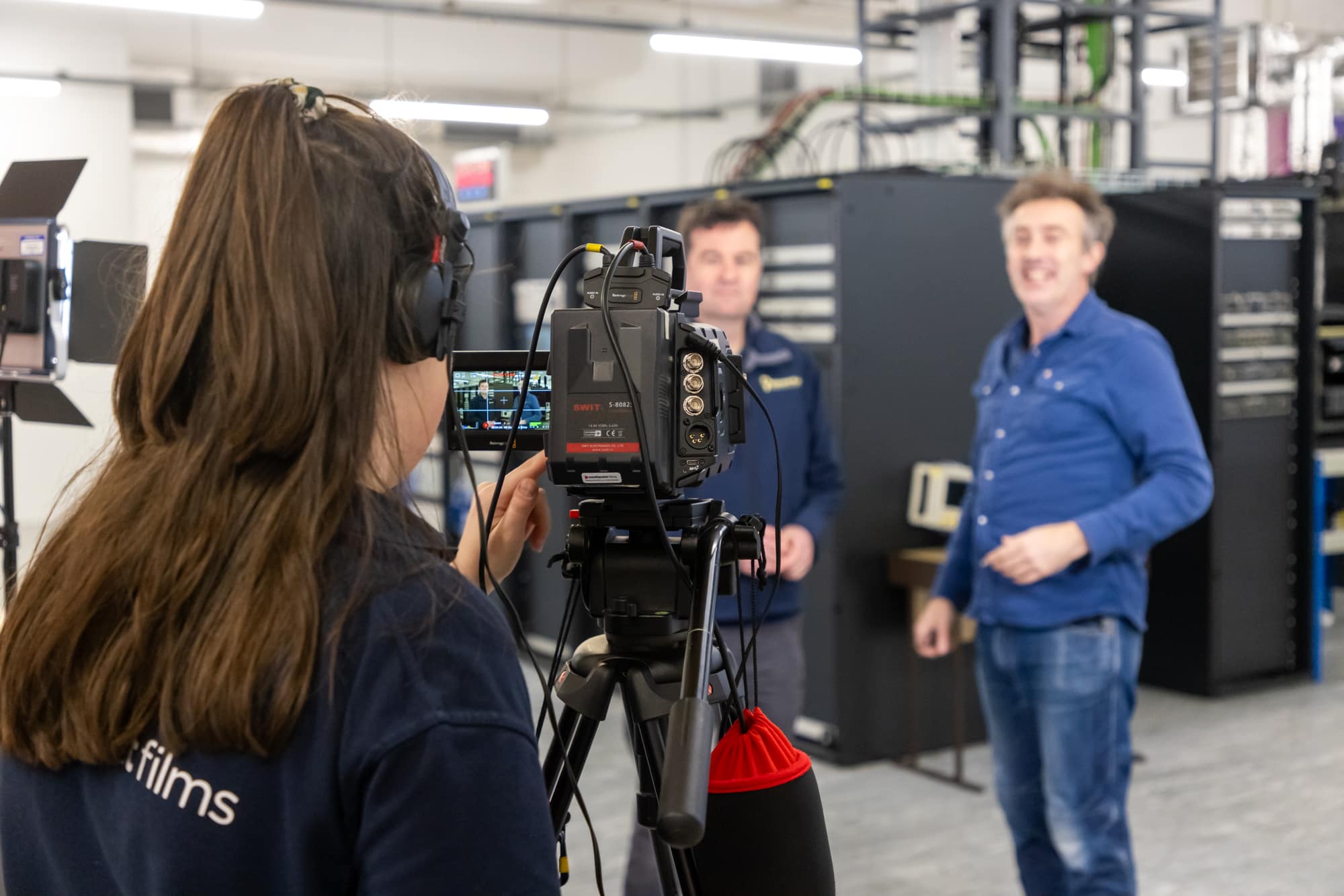
For the studios, we used two Blackmagic URSA Broadcast cameras and a Canon CR-N300 PTZ camera. We had to overcome the challenge of not being able to run cables directly to the conference room, so we used the IP network within the building to bridge the room with our gallery, employing ATEM Streaming Bridge, NDI, and Dante to get the audio and video feeds working perfectly.
For the virtual callers and panels, we used Zoom as the backbone, a familiar platform for the guests. We ran ZoomISO on two MacBook laptops, which gave us high-quality feeds of each individual caller and their screen shares. This allowed us to take each caller into our vision mixing software, VMix, where we repackaged them into a custom branded layout before sending them to the Atem vision mixer for the live show.
As the camera teams filmed pre-recorded segments around Goonhilly, we edited the clips immediately, ready to use in the live stream the next day. It was a great example of how multi-skilled our team is.
Finally it was Show Day!
When show day arrived, we were ready to go. We started our video encoders and began streaming to Vimeo, embedded on a custom microsite created before the event. We used Slido to manage audience Q&As and polls, with our client moderating the messages.
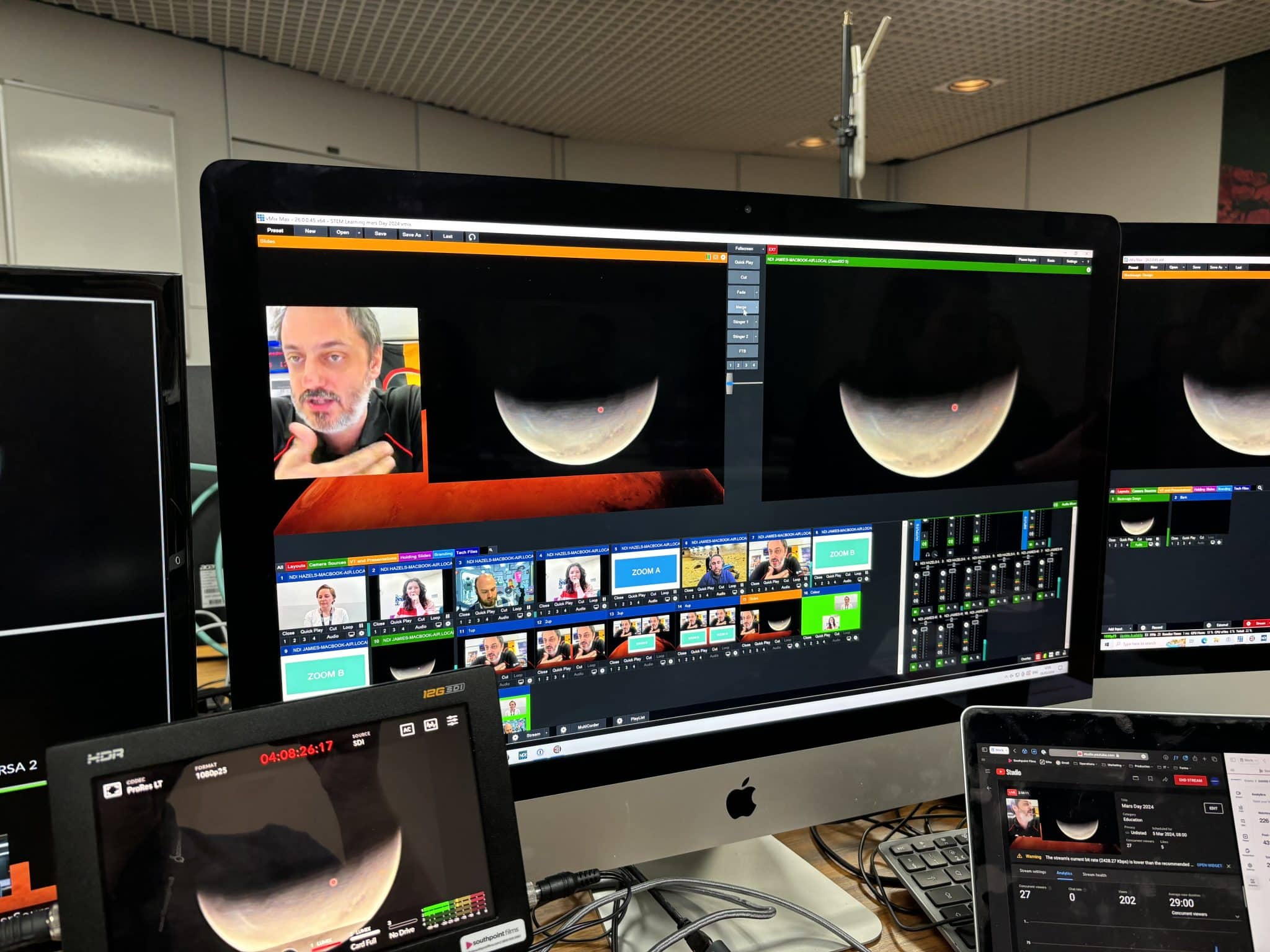
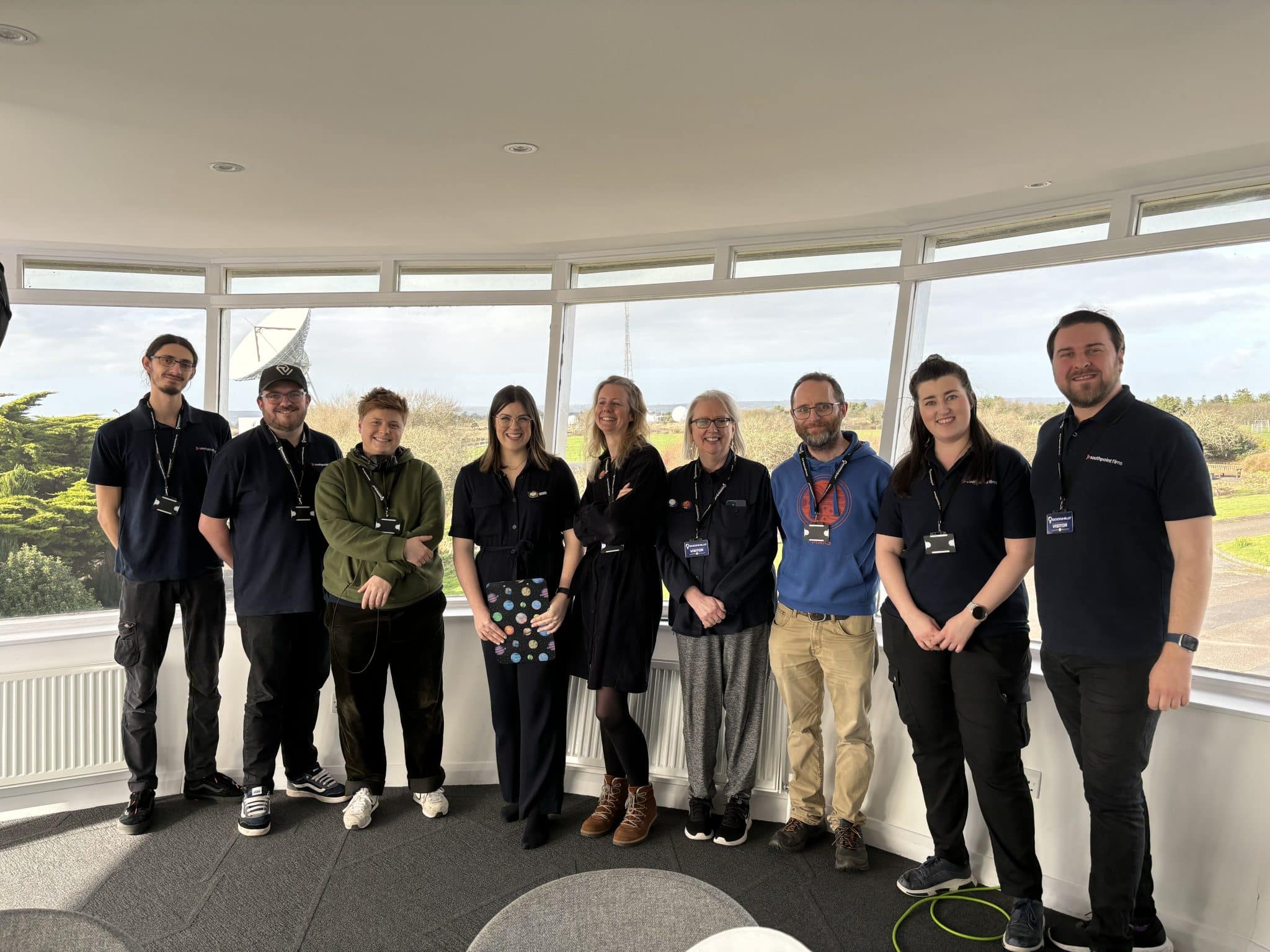
All the preparation paid off, as the show went off without a hitch. Dallas Campbell and Izzie Clarke conducted interviews with virtual guests, including astronaut Tim Peake, who joined for a fantastic Q&A session. Just before midday, Simon Wood from ESA gave us what everyone had been waiting for—an image of Mars captured earlier that morning from the Mars Express.
Which means we can officially say that we live-streamed an as-close-to-real-time-as-humanly-possible image of Mars. We can’t wait to see how we top this next time!
If you have a live streaming project coming up that we could help you with, why not get in touch?
Enjoyed this article?
Sign up to our newsletter to get our content delivered straight to your inbox.
Every time we post something new, we’ll send it directly to you. No spam, no junk, and you can unsubscribe at any time.